
Take up the Robe
Leadership in Impossible Times

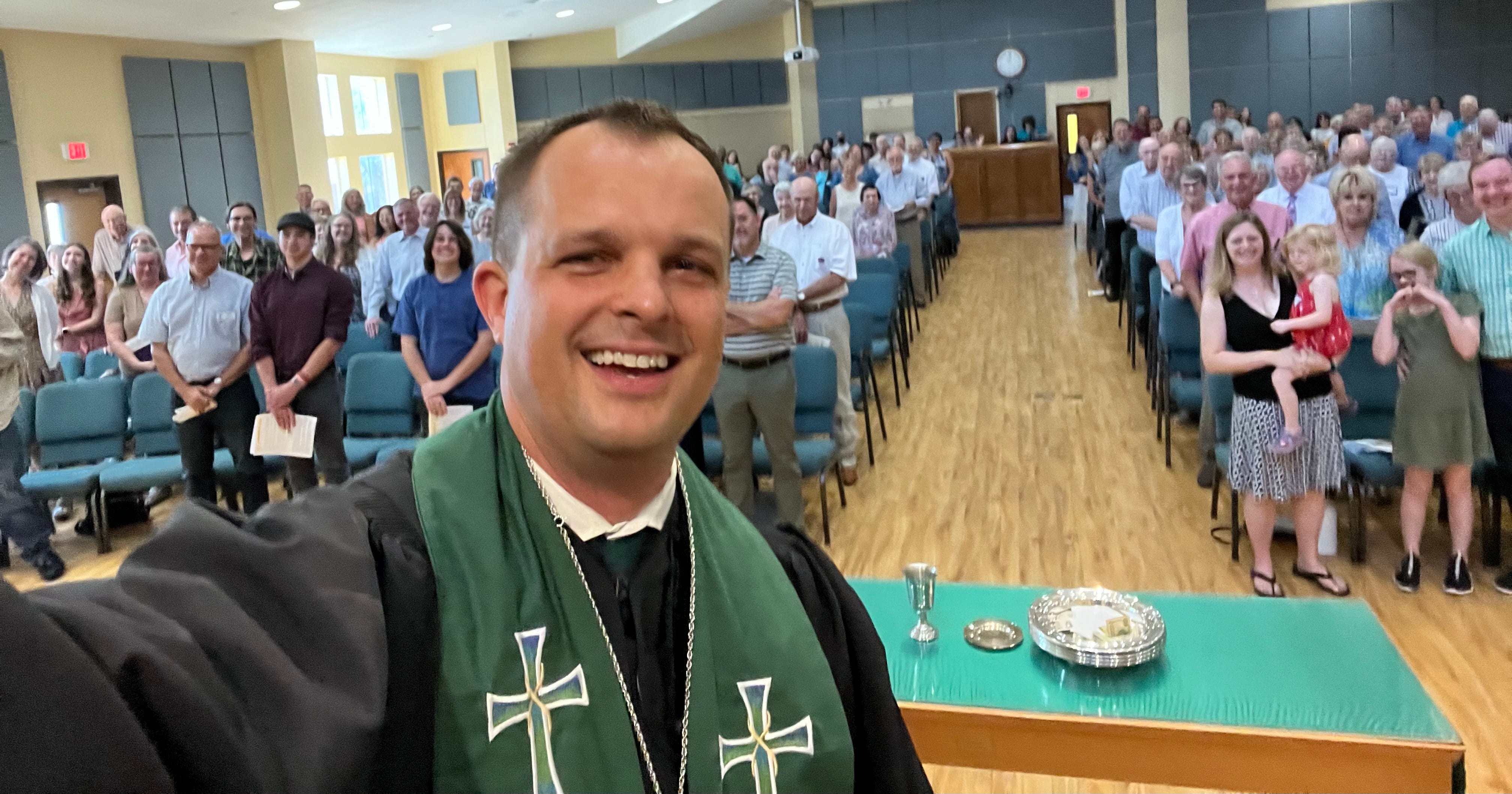
For fifteen years, I preached in a tradition in which wearing a black Geneva gown was the standard - complete with precise, flowing pleats across the shoulders and down my back. Each Sunday, my entire body was subsumed by its shapeless, scholarly, and holy fabric. I struggled with it.
The first Sunday that I showed up to help lead a traditional worship service with my robe on, I felt like a fraud. Sure, I had completed seminary, passed my ministerial exams, and been formally called to serve a particular congregation, but I still felt so small inside that massive robe. Who am I to wear this?
More, I didn’t like how distinct the black robe made me. Everybody else arrived on Sunday morning wearing regular clothes. I preferred the idea of showing up in khakis or blue jeans and a polo shirt. I just wanted to be one of the people. No better, no worse, just blending right in.
At social gatherings outside the church, I’d often introduce myself and then move quickly to ask the other person a question. And then another. And then maybe offer some commentary about what they were saying before asking yet another question. It was my way of delaying the moment when they would ask, “So what do you?”
For as long as possible, I wanted to remain normal because as soon as I would say, “I’m a pastor,” it felt like they saw a robe on me. They apologized for any foul language they may have used, and frequently they were far less sure what to talk about. At that point, I would double down on normal. I would talk sports. I would talk weather. I would talk The Office. Anything to suggest, Look, I’m like you!
The problem is this: at the end of the day, I was not, in fact, like those in my congregation. Not because I was extra holy, extra smart, or even a little extra good. Not at all. I was different because I held a unique leadership role – I was among the small cadre that the community had set apart to speak God’s Word. To preach, as they say.
This was a centrally important task every Sunday, but it became especially important on days and seasons when things got tough. Where people were dealing with really hard things. Sundays when the nation and even the world itself felt uniquely unmoored. Then – especially then – there was a deep need for me to don the robe and do what only a few of us had been called to do in that setting: speak a word of holy truth into the impossible reality.
That call was especially memorable for me on the following Sundays:
The Sunday of the 10th anniversary of 9/11.
The Sunday when nationwide protests were unfolding after the officer who killed Eric Garner was not charged with murder.
The Sunday after Dylan Roof murdered nine members of Mother Emanuel AME Church in Charleston, SC
The Sunday after Donald Trump was elected President in 2016.
The Sundays I preached my farewell sermons from congregations I loved.
The Sunday when it became quite apparent we would not be meeting in-person for some time due to Covid-19.
The Sunday after George Floyd was murdered.
The Sunday after January 6th.
· The Sunday after Russia invaded Ukraine.
The Sunday after nineteen children were murdered in their classrooms in Uvalde, Texas.
The Sunday after the Supreme Court struck down Roe v. Wade.
There was a heightened emotional tenor on these particular Sundays. A mix of anxiety, anger, grief, and deep uncertainty felt far more visceral than on most other Sundays. Which also meant that people gathered with a uniquely keen desire for a word from God. For direction. Answers. Comfort.
Someone had to speak.
Also, I should say plainly: not every impossibly challenging Sunday during my pastoral days is represented above. On some of those weeks, another pastor was scheduled to preach and so spoke into the moment. I was, on those Sundays, much more like one of the people in the pews. What I discovered is that this, too, is instructive: the robe does not fall on everyone at once. It falls on the one who has been called to carry it in that particular moment, in that particular room.
--
Today, it feels like most weeks every single year are like one of those Sundays.
Last year, I opened a keynote with 250 marketing professionals in higher ed with a simple question: “What’s one word that describes your week so far?” A woman raised her hand and said, “beleaguered,” and then the crowd let out an audible wave of ‘yeses’ and head nods.
It’s a word that literally means “surrounded or hemmed in by a military.” It conveys a sense of being trapped, overwhelmed, and feeling threatened in every direction. When I then wrote about this moment in my weekly newsletter the next week, I received numerous email responses all essentially saying, “Yes. Beleaguered names my reality, too.”
Constantly, our sense of national and global stability is under threat from the rapid growth of technology, the whims of world leaders, and the volatile animosity between any number of people groups and parties around the world. While we don’t know where things are headed, it frequently feels like tectonic plates are shifting beneath us. Old alliances are breaking. Once trustworthy brands are suspect. The market feels ever-jittery because we, ourselves, feel that way.
Then, of course, there are the massive challenges around the rise of AI’s undeniable impact intersecting with our epidemic of loneliness. In a time where fears around keeping or finding a job are acute given AI’s potential, few know where to turn for help. We’re isolated, lonely, and painfully realizing that our social fabric is threadbare compared to what it once was. This fact alone leaves us feeling especially exposed to the omnipresent threats. Beleaguered.
Can someone speak to such a moment? Provide direction? Comfort? Answers, even?
Historically, there is no shortage of people who step toward leadership in times of heightened anxiety. Instinctively, they recognize the vulnerability people feel, and they stoke that fear. Over and over, they sound the alarm about just how bad the surrounding ‘army’ is out there.
Those people.
That party.
Those monsters.
Their use of dehumanizing language is the most obvious sign that fear-stoking is their strategy for keeping and growing their following. For the larger and more ardent their following, the more easily they accumulate their ends without question. If it costs lives on the other side, so be it. That side was less-than-human anyway, goes the unspoken (and sometimes spoken) logic. And, sadly, leaders of this ilk arise in every generation of humankind.
While we may rightly critique this kind of leadership as morally repugnant and wrong, the very practical problem is this: it’s deeply attractive. To many, it feels like an answer. It feels like safety. It feels like someone who’s in control of all the chaos. Eventually, this kind of leadership feels overwhelming and inevitable as it commands the attention of major donors, major deals, and the major airways. Frequently, it also gains significant military strength.
There are, of course, other leaders who could emerge in such times. Big and small voices alike who name the truth in a different way. Leaders loathe to use fear as a motivating tool and far more inspired by the idea of what is possible through the likes of creative love, generosity, and mercy. But frequently, such leaders are deeply tempted to blend in.
This too shall pass.
Someone will step up soon enough.
This can’t go on forever.
Heather Cox Richardson notes that one of the key signs a society is on the brink of authoritarian takeover is this: most people say aloud or within themselves four simple words: “Someone will fix it.”
And so… quietly, reservedly, and anxiously we wait. Surely, another will take up the leadership robe for such a time as this. Surely, it cannot be only those who trade in fear, lies, and cover-ups. Surely, the pendulum will swing here shortly.
But…
What if the people who need to take up the robe are you and me?
What if the ones who most naturally say “Who am I to wear this robe?” are actually the ones this world needs most?
What if our days in jeans and polos are over?
For the next few months, I’ll be offering weekly pieces most especially for the person who is wondering Is this me?
The person who has oftentimes found it difficult to believe that the leadership robe was theirs to wear, but they also find that they can no longer justify handing it to someone else.
These pieces are for the person who today may or may not hold a formal leadership role, but they nevertheless recognize that authority is not bestowed upon position alone. They recognize most fundamentally that leadership is bestowed upon those called. Those inexplicably drawn. Those who feel a fire growing within and know they must speak, must lead… but how?
How to do it well?
How to do it wisely?
How to do it courageously?
If this is you, and these are your questions, I welcome you to this journey on which you do the simplest and most difficult thing in the world: take up the robe.
Bobby, thank you for this thoughtful, provocative piece.